Categories
Africa

Morocco (Part 3: Monkeys, Camels, and Horses – And More!)

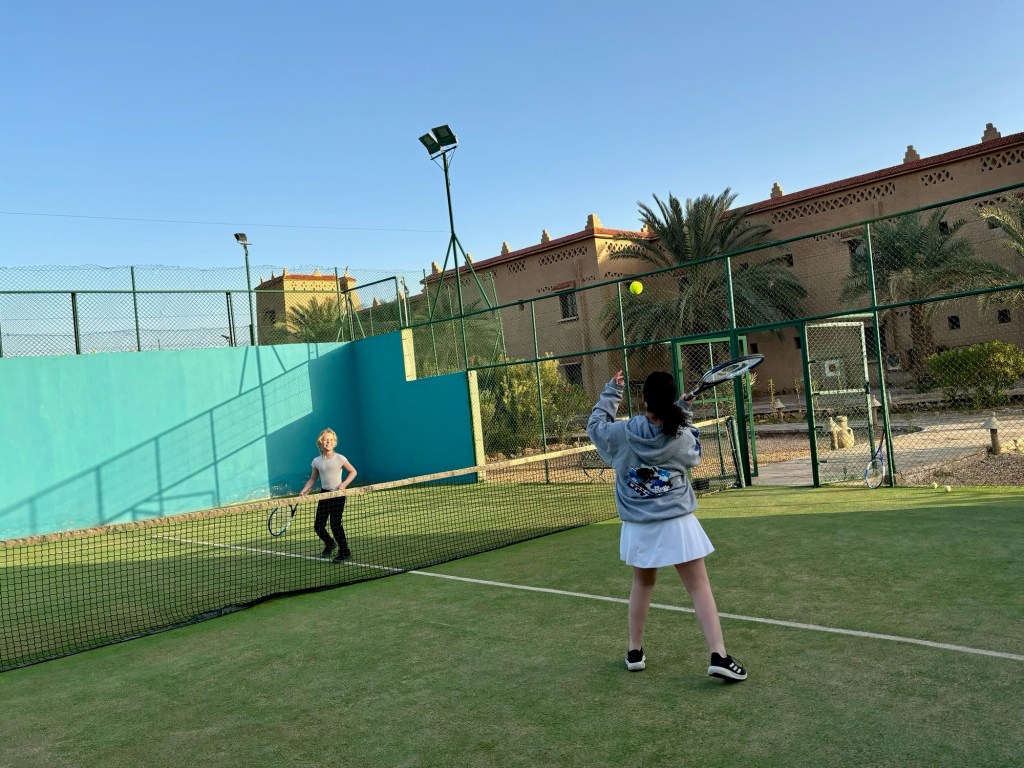
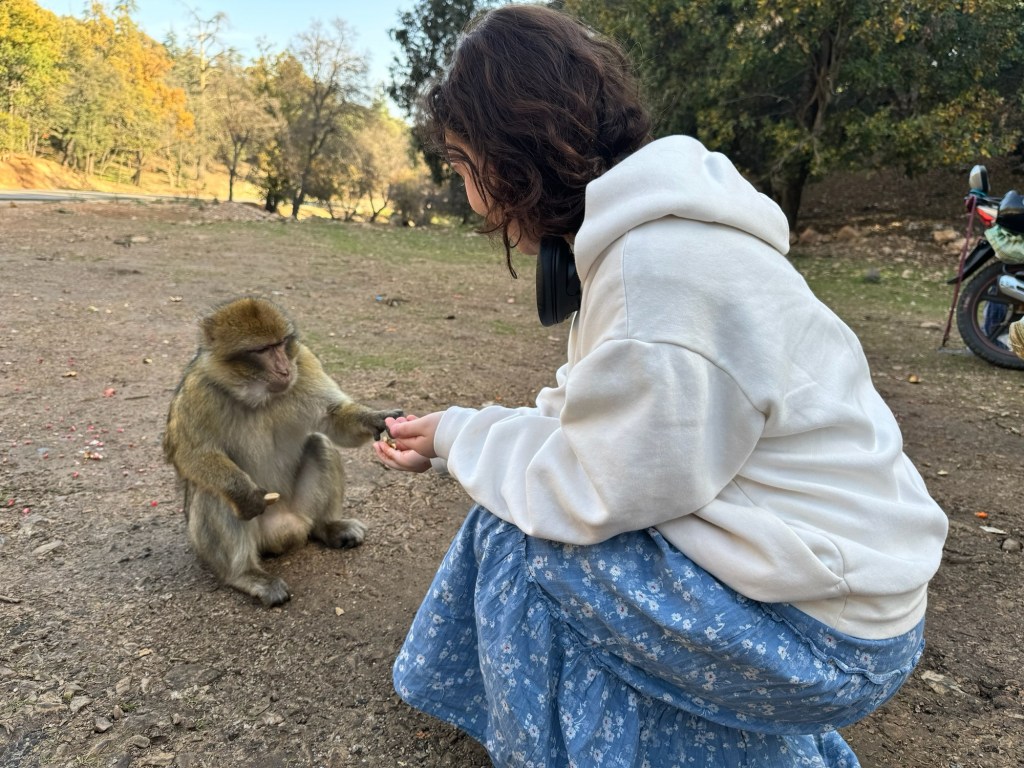
We spent our Thanksgiving weekend being grateful in the Sahara Desert.  Before we even got there, we stopped in the cedar forest to feed monkeys which was a blast.  At one point, a monkey grabbed a bag of food from Dev and ran off but paused to look back at her and laughed – so we laughed right back! After a long drive we spent the night at the edge of the desert at a funny hotel complete with mini golf on the roof and a tennis court (which Dennis and the kids conquered).  

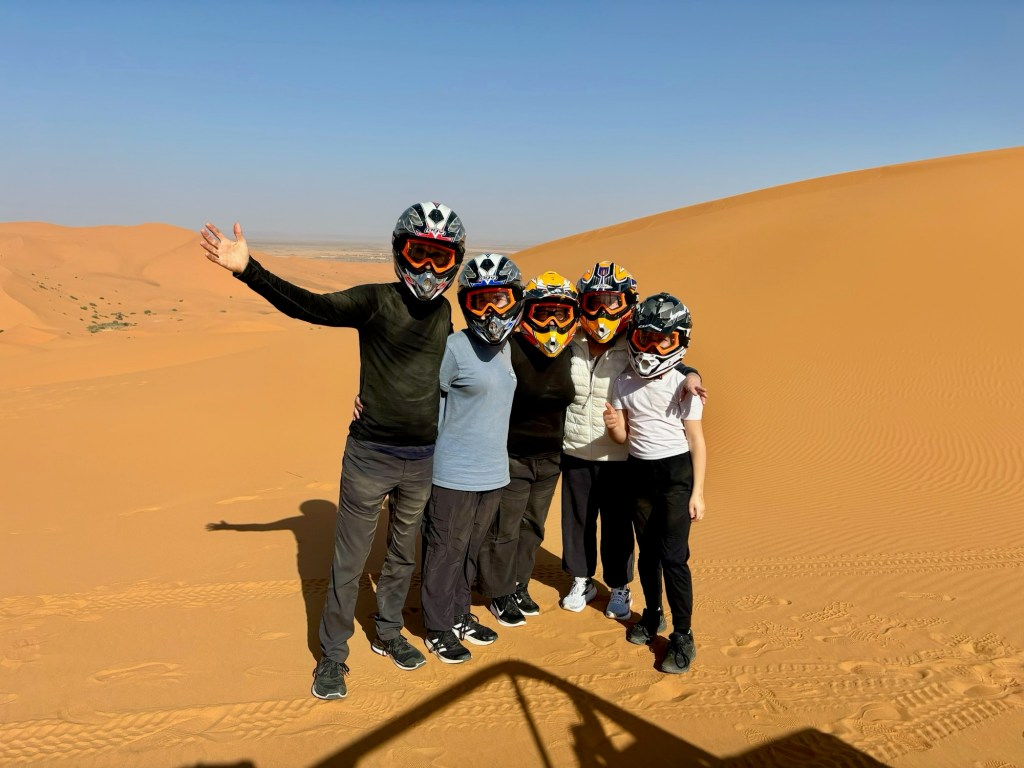
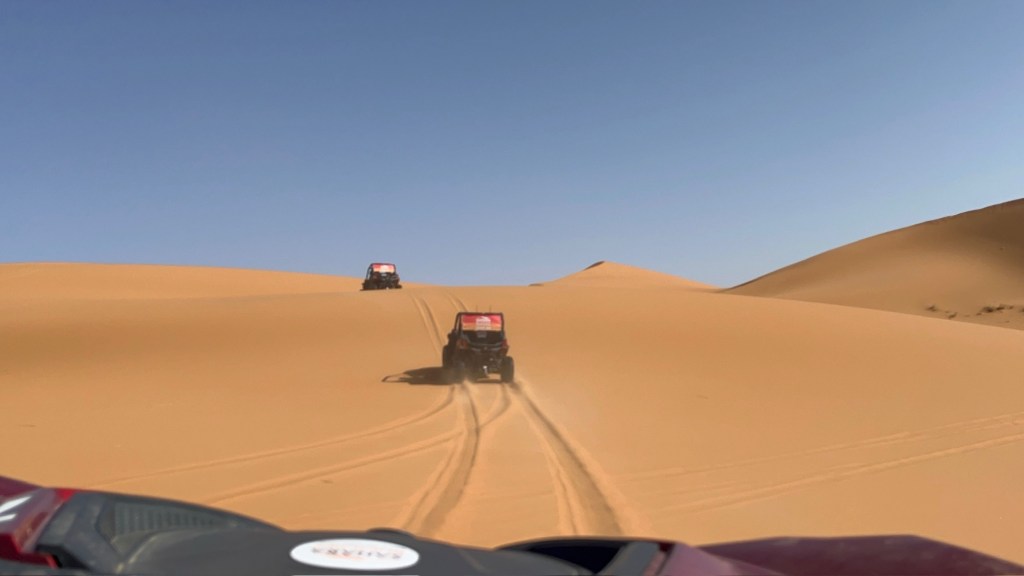
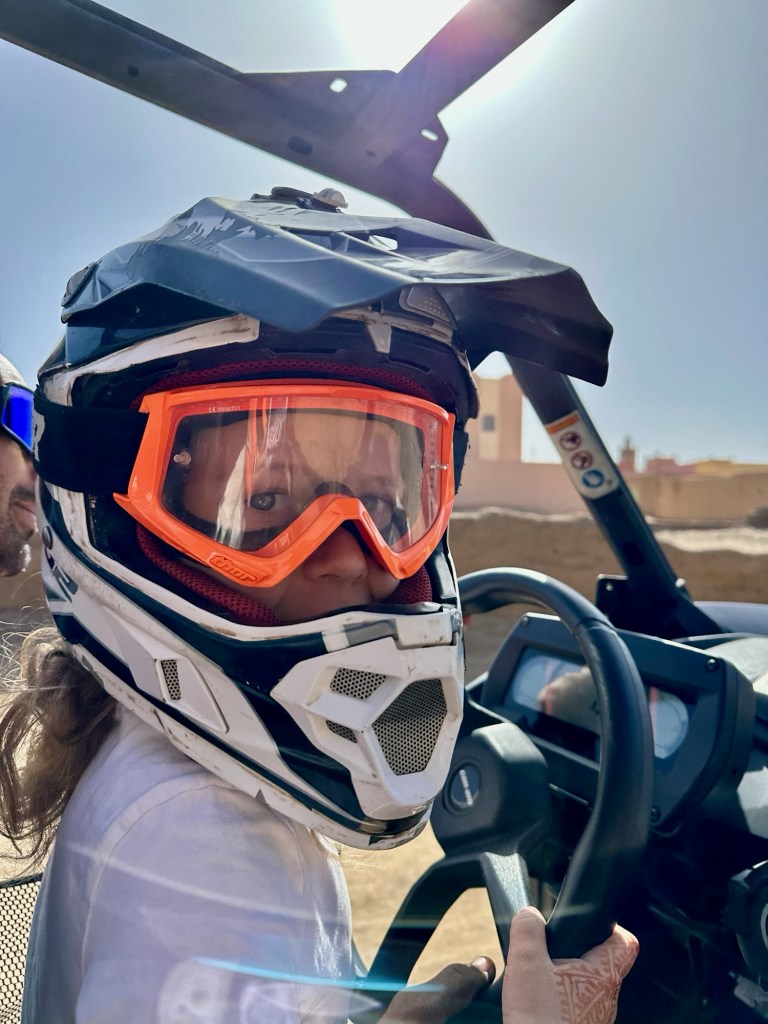
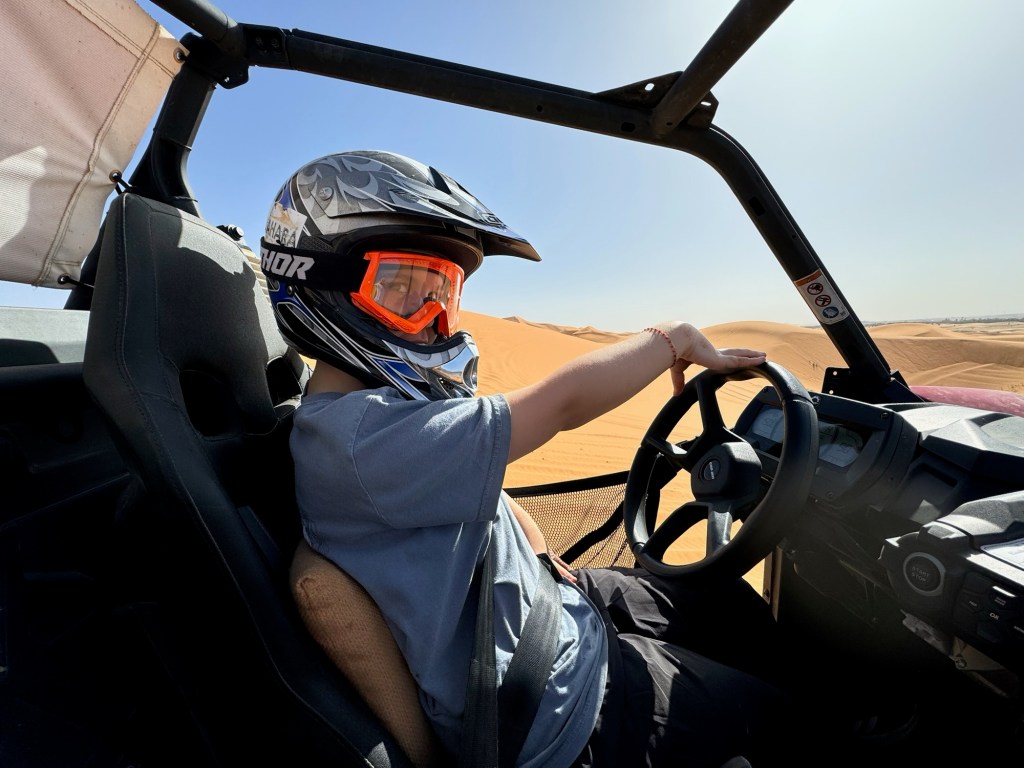
In the morning we set off and really maximized the day.  One of the highlights was driving dune buggies into the desert.  It was like another planet and reminded us of White Sands in New Mexico.  There were sections where we could only see dunes in every direction and driving over some of the high ones was exhilarating. Mira and Dev even drove the buggies for a bit!  

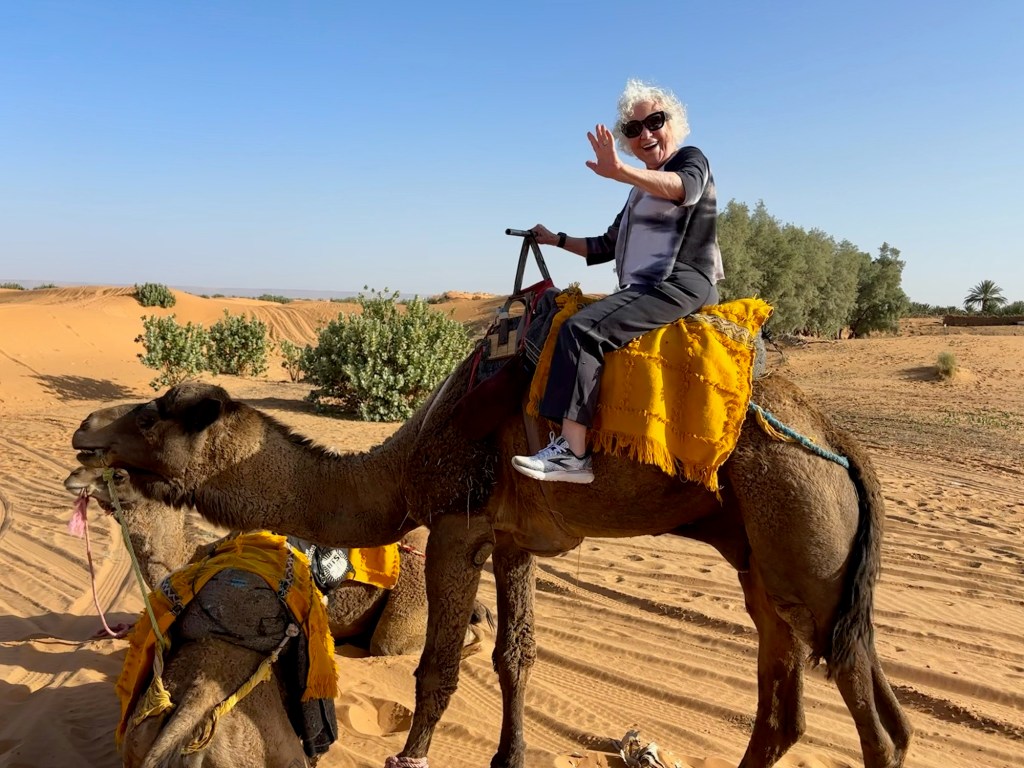
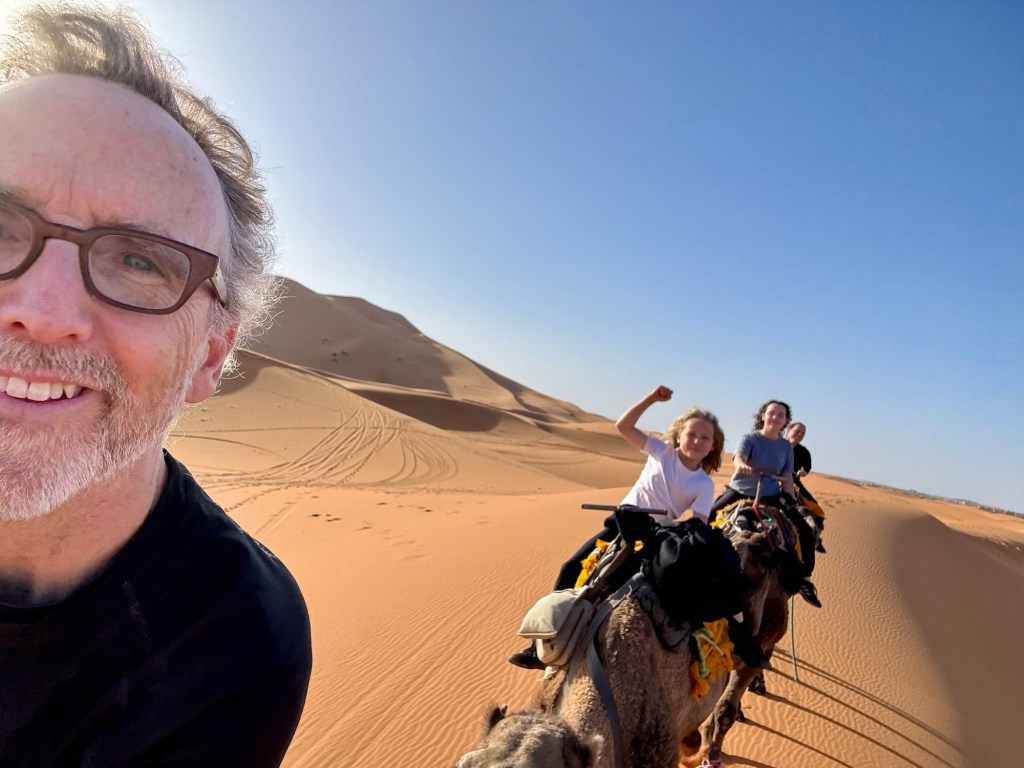
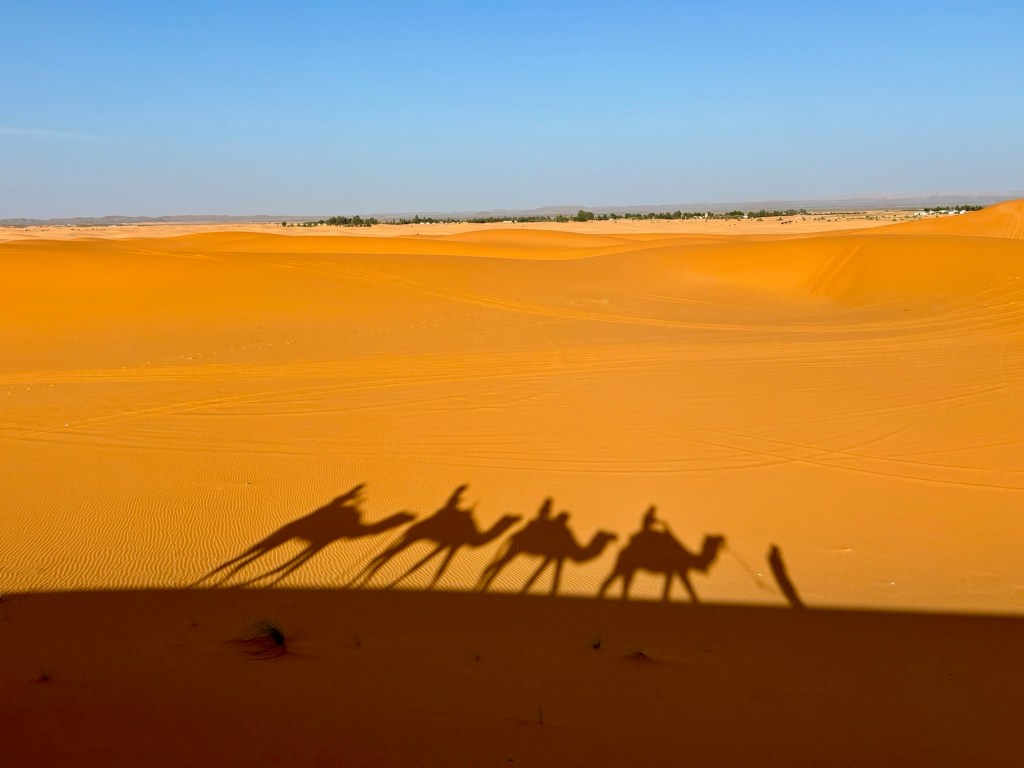
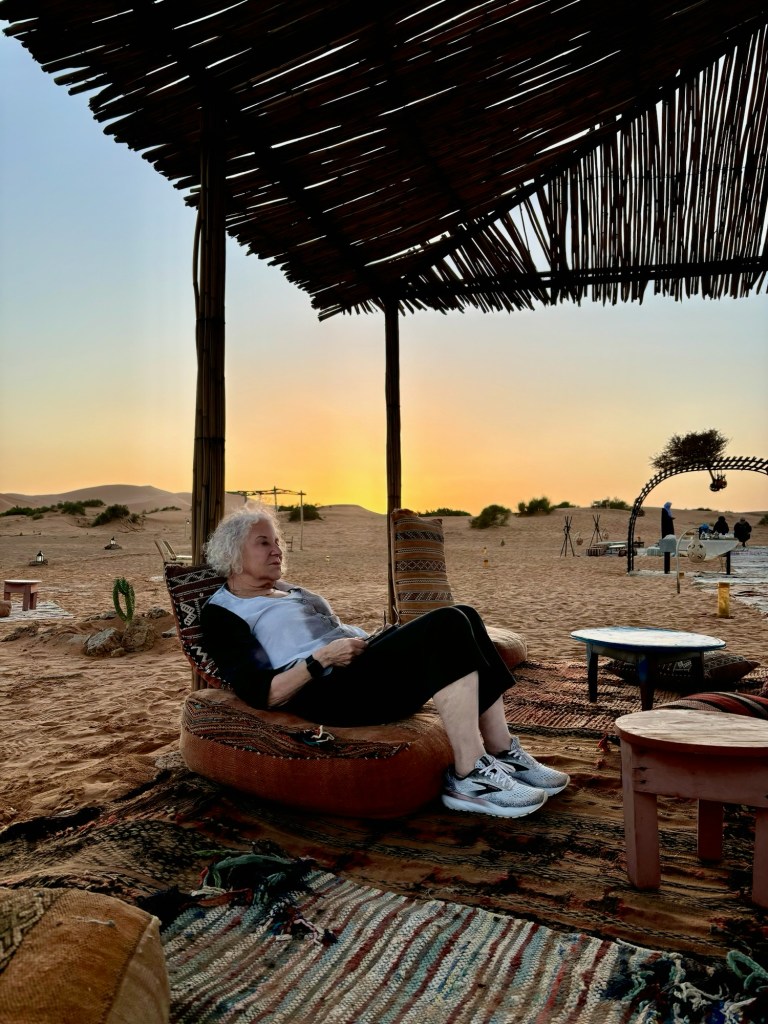
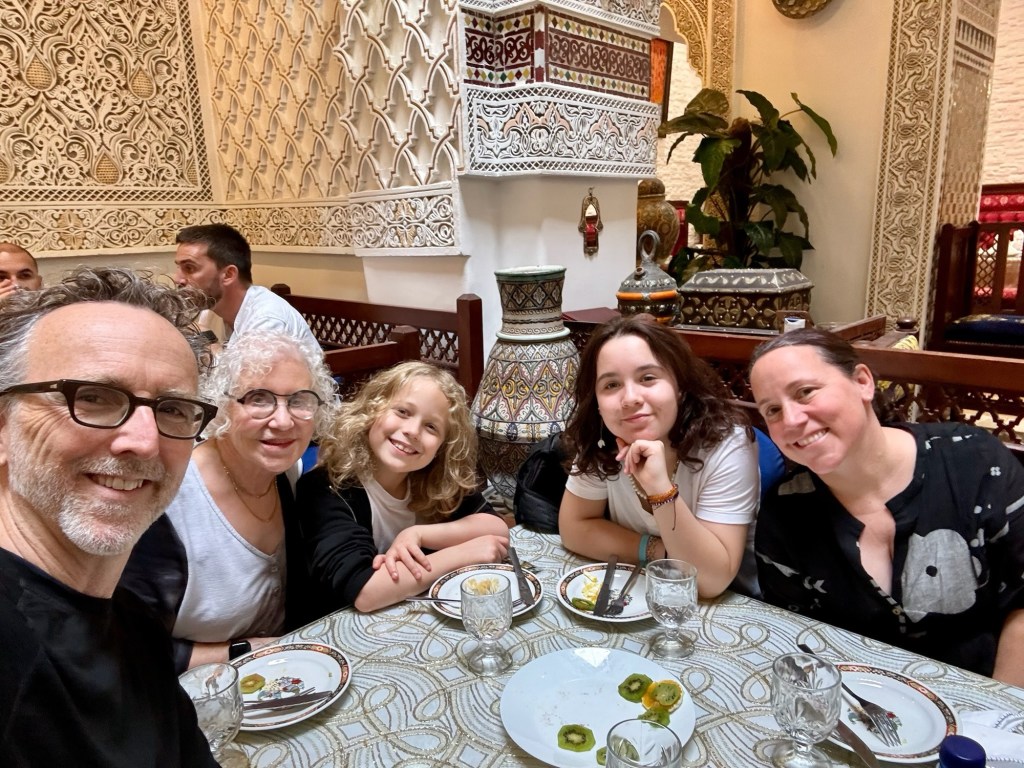
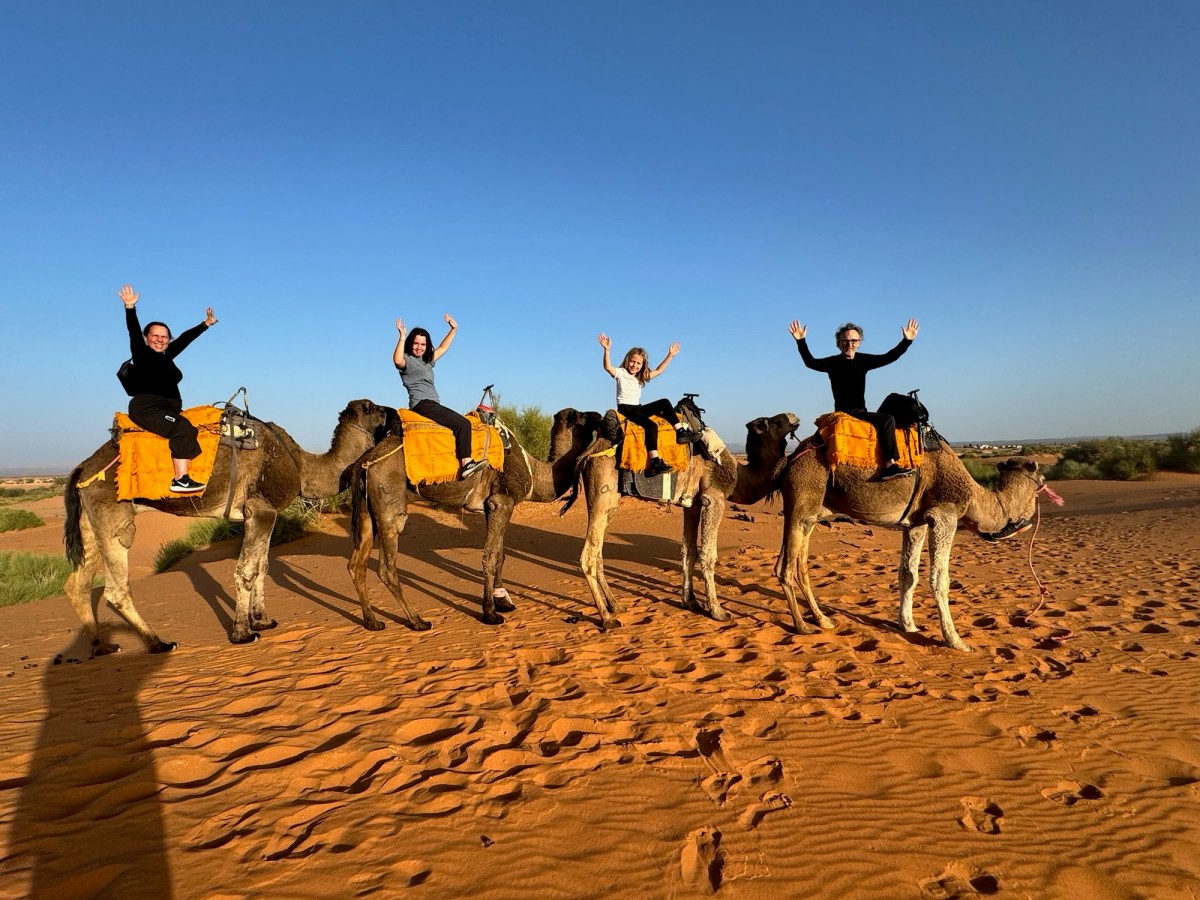
After a great lunch at an Amazigh** restaurant, we took a much slower trip on camels to our campsite in the Sahara.  We learned that camels are really uncomfortable to ride!  The camp was amazing and very Grandma Martha.  Definitely glamping at its finest.  The highlight, however, was an astronomy class after the stars came out.  We learned all about North African and indigenous astronomy (fun fact: ursa minor/major are called momma and little camel!).  It was a perfect, cloud-free night with no moon so the view was amazing.  Among other things, we got to see Saturn’s rings, Jupiter’s moons, the Orion constellation, and the Milky Way galaxy.  

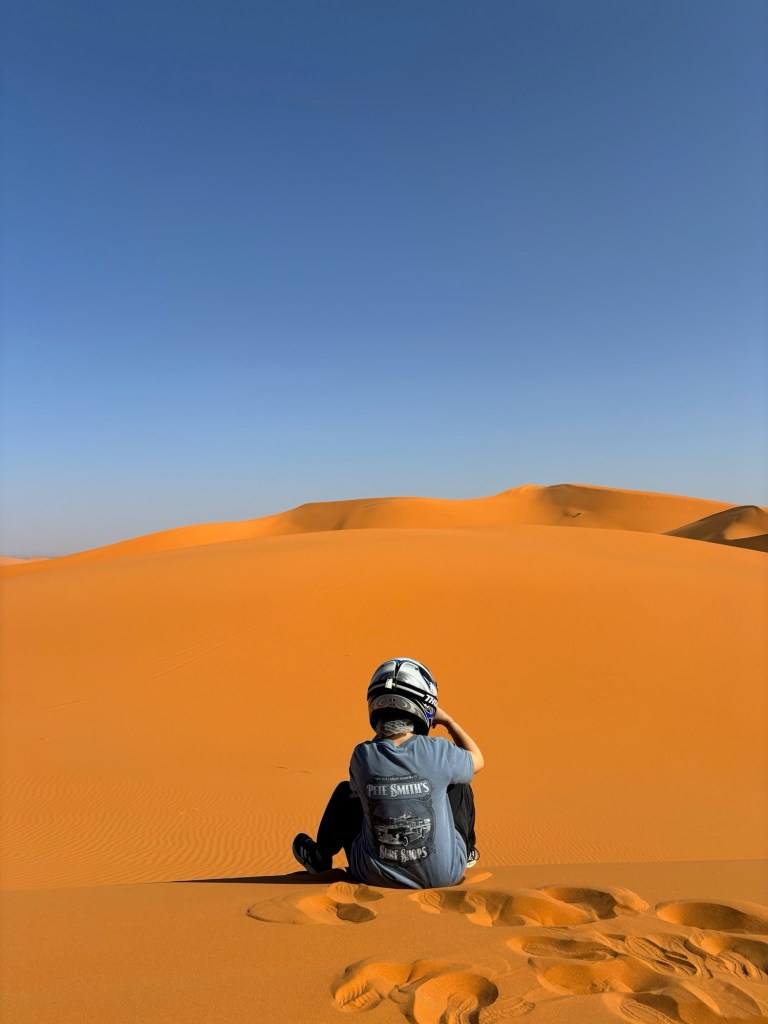
After waking up early to see the sunrise and do some (kind of slow) sandboarding, we took off for Skoura.  This time we skipped the camels and took a 4×4 pick-up truck.  No doubt the kids will say that a major highlight was riding in the back of the truck – on top of our luggage. The driver sped over dunes while the kids sang at the top of their lungs.

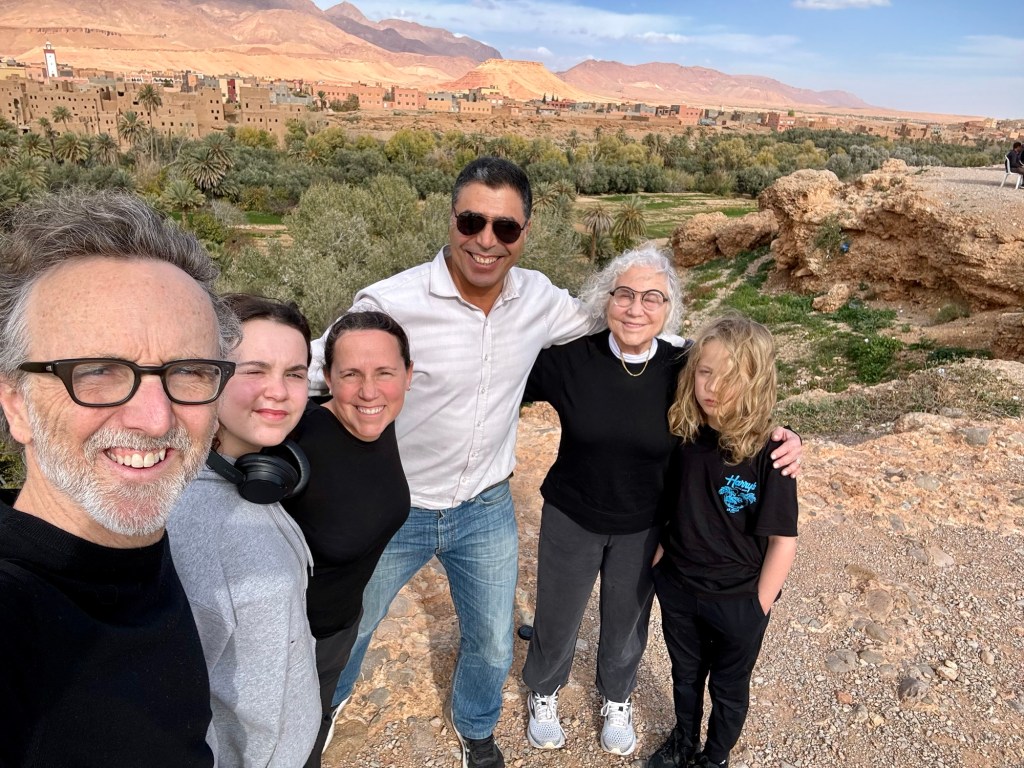
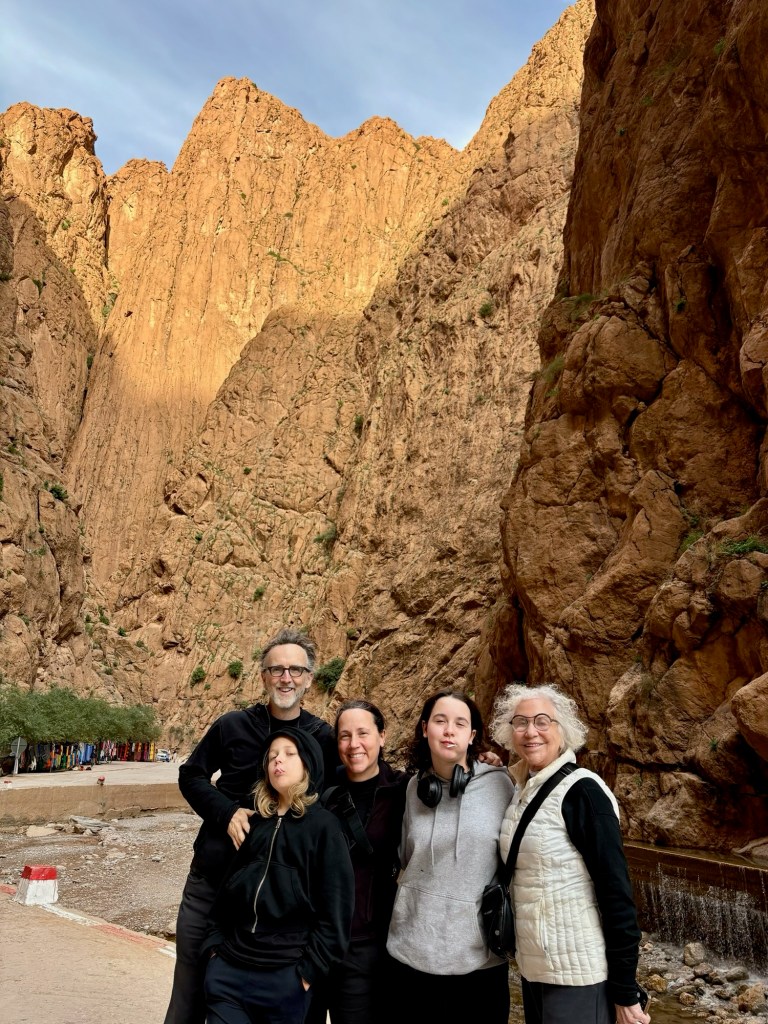
Before leaving the desert we stopped to learn about the continental drift and how the Sahara Desert used to be covered in water. We learned about all the fossils they have found in the area and even bought our very own trilobite fossil. Afterwards we stopped for a dramatic walk through the Todra Gorge in the Atlas Mountains.

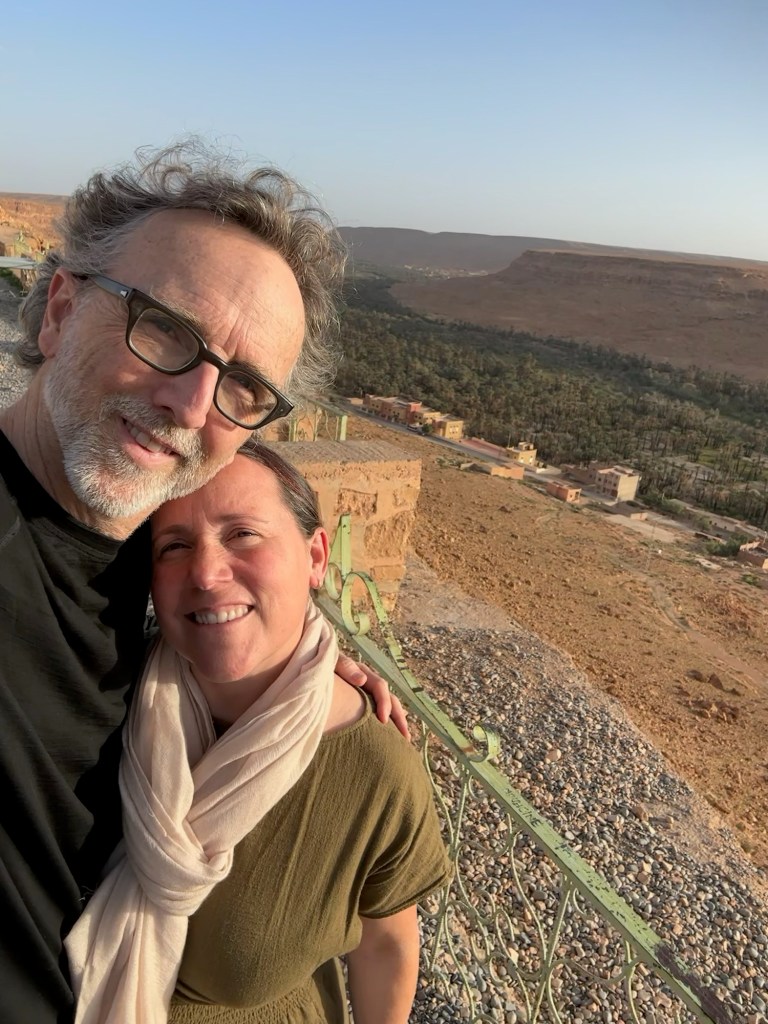
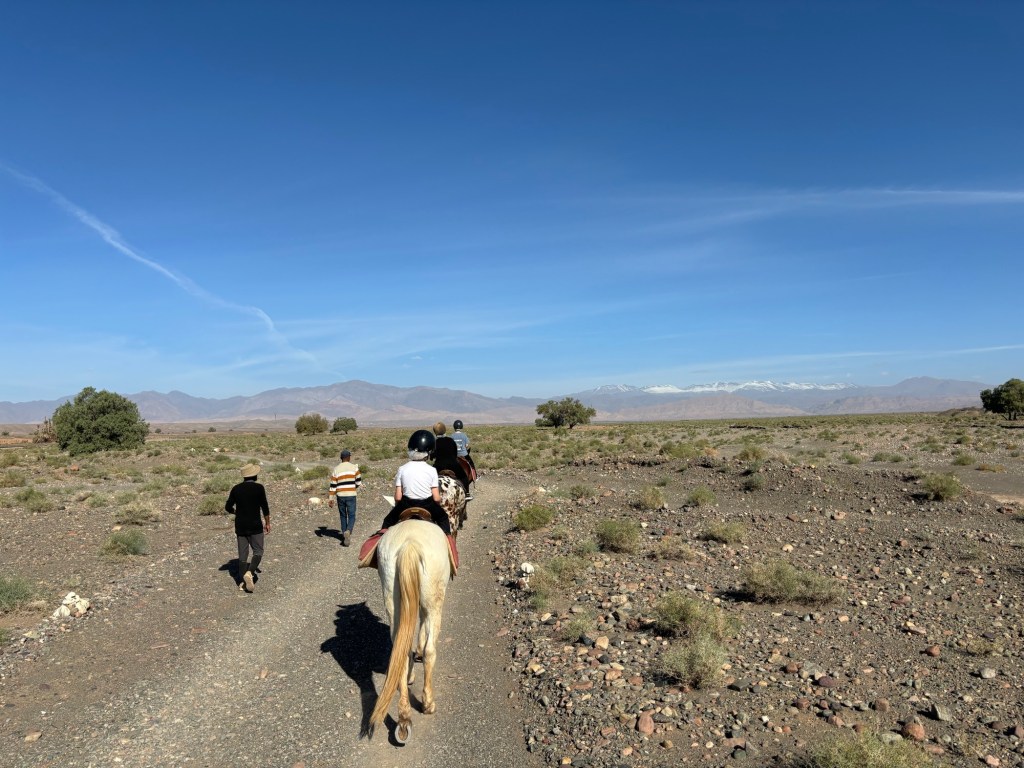
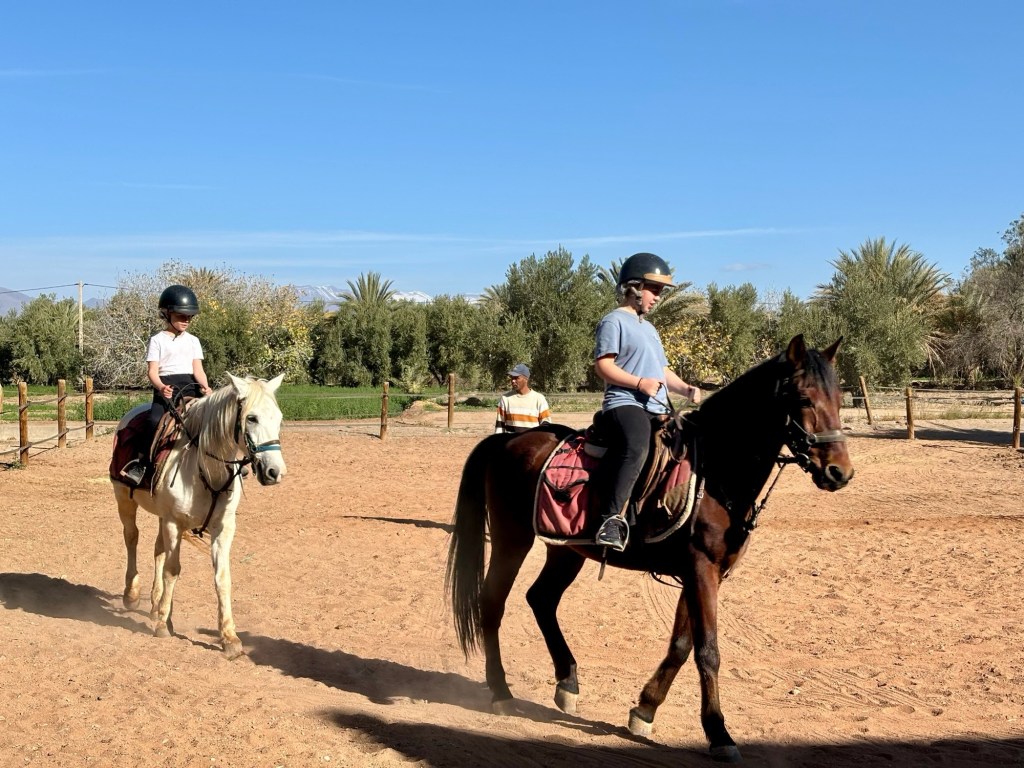
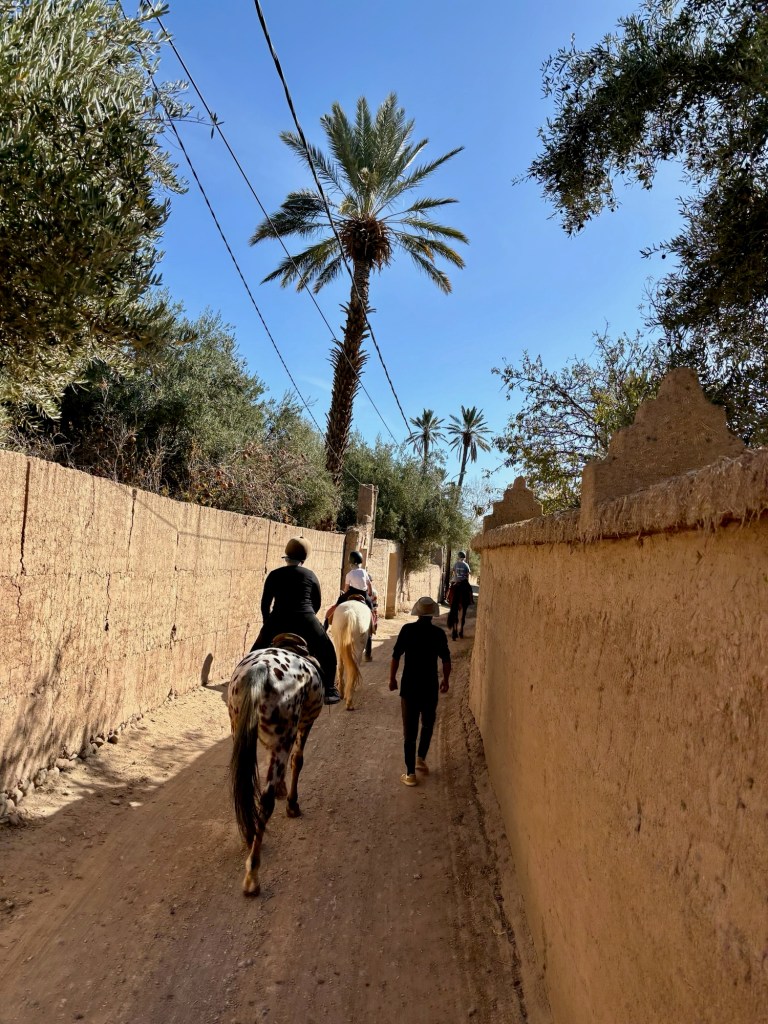
After a drive along a dirt road, we spent two nights in a town called Skoura, which is in an amazing oasis of palm groves in the desert.  Due to the drought and lack of water, the palms weren’t as green as usual but it was still surprisingly green compared to the rest of the landscape.  We went horseback-riding (with english saddles!) and the guides were kind enough to get the horses to trot a bit; luckily nobody fell off.  It was a wonderful way to explore the nearby villages with their beautiful architecture and many kasbahs.

Tomorrow we’re off to Marrakesh.    

**The Amazigh people, often known as the Berbers, are an indigenous ethnic group of North Africa who have lived in the region since at least 5,000 BCE. The term “Berber” comes from the Latin word barbarus, which was used by the Romans to describe non-Latin-speaking peoples and adopted by the French when they controlled Morocco.  The Amazigh prefer to be called by the term Imazighen, which means “free men” in their language and the term Berber is considered derogatory. 

Be sure to check out the video from Mira below the photos!
Here is the link which might help to watch.

https://youtu.be/3npw3lq1nfI?si=g8Ur5BbYYcXrfNS1

Categories
Africa

Morocco (Part 2: Fes)

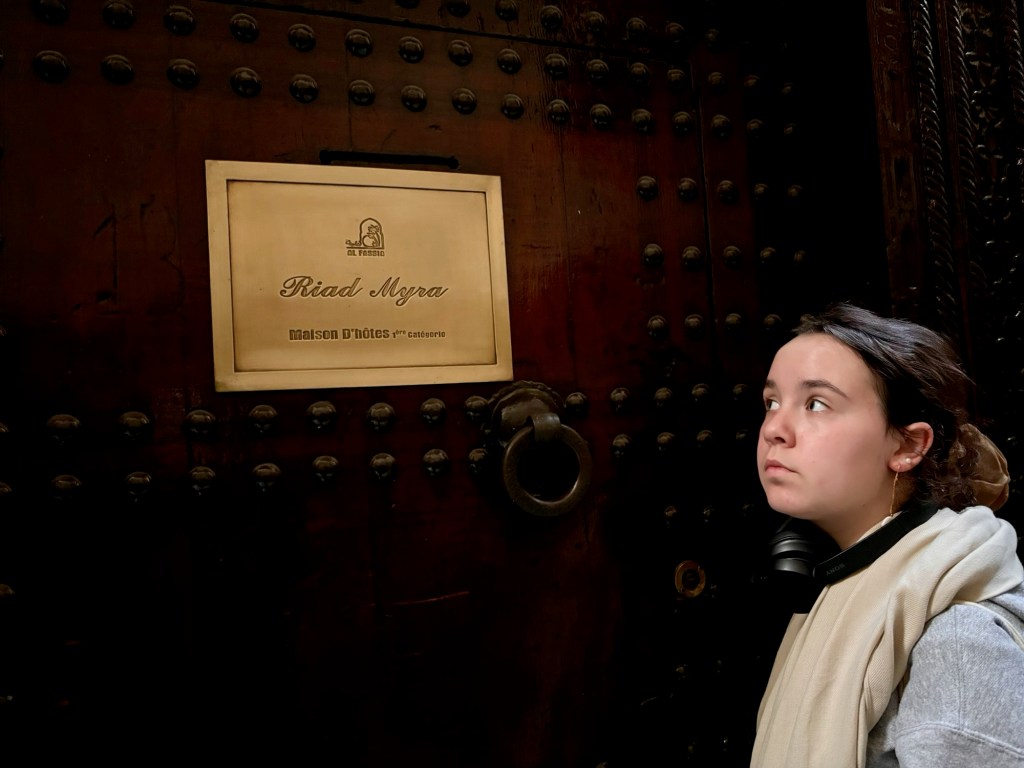
In Fes we are staying at none other than Riad Myra!  A perfect name (if not spelled a bit different from our Mira) and an amazing place.  Riads are former homes in the medina that have been turned into guest houses.  We were told that riads are what used to be “middle class” homes. Traditionally, there are no windows on the outside of any of the homes and it all looks the same on the outside so you cannot tell how much wealth the family has.  The intent was for integrated communities.  Once you get inside, the homes are built around a central courtyard which would typically have a garden. 

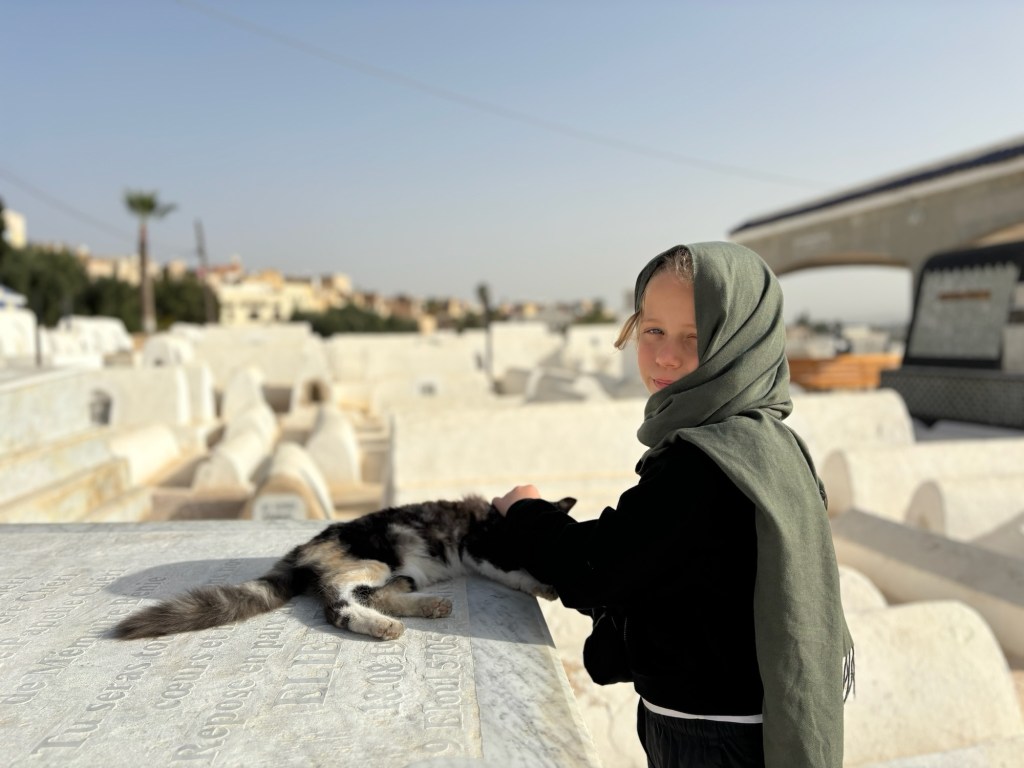
We were lucky to stay in Fes for four nights and finally have more time to relax.  We had another amazing guide the first two days who specialized in Jewish history.  We saw the Jewish area (which is always next to the palace) and explored the Jewish cemetery which was really striking.  Not surprisingly, Johanna’s favorite tomb was a Jewish “saint” who was known for helping people who were innocent and wrongfully accused (after he experienced the same).  Since so many of the Jews moved to Israel, all of the current caretakers of the cemetery are Muslim.  We also saw the Ibn Danan synagogue built in the early 17th century, including the underground mikvah.  

After the Jewish area, we went to see the Royal Palace and also the University al-Qarawiyyin, often recognized as the oldest operating university in the world.  

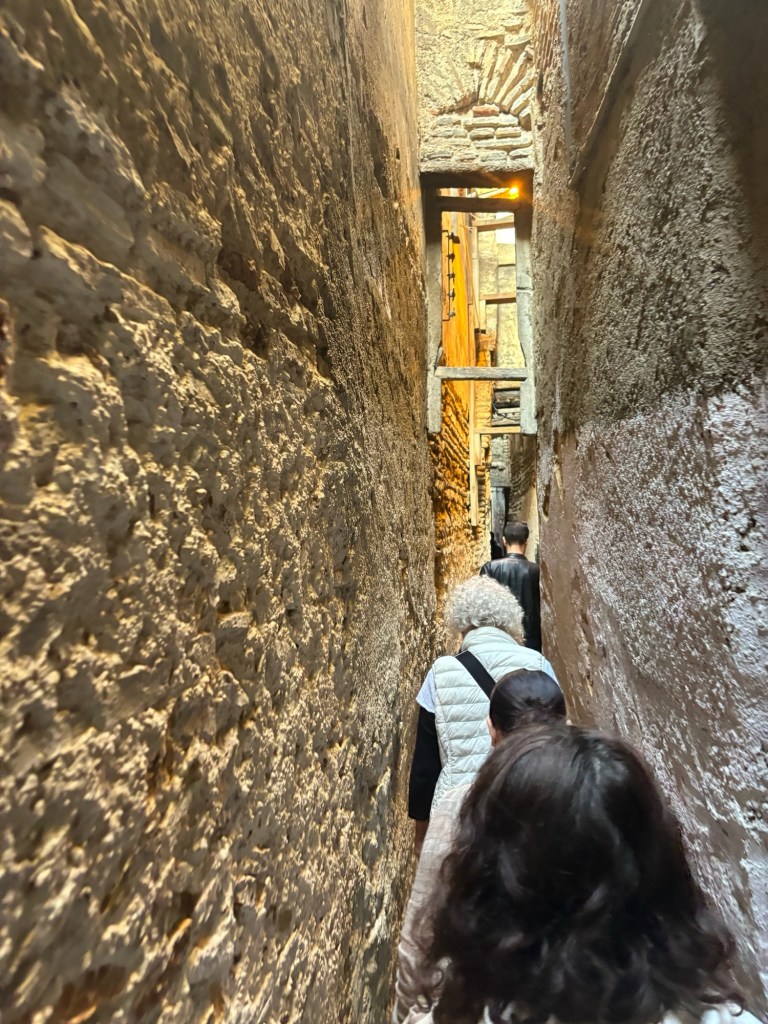
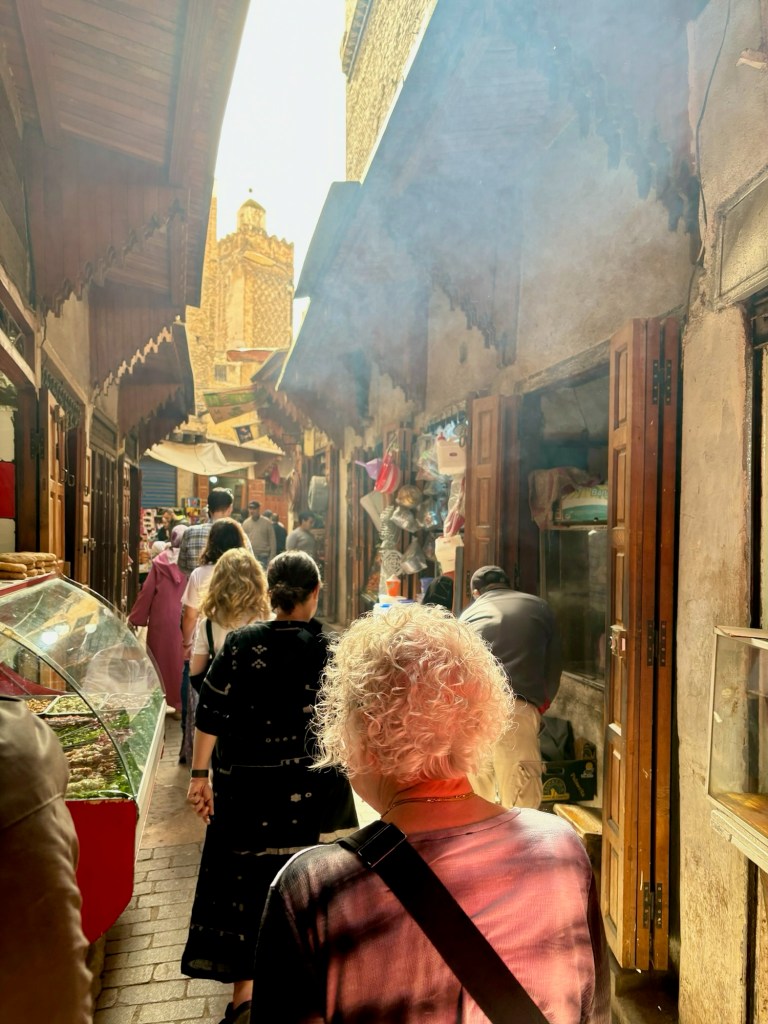
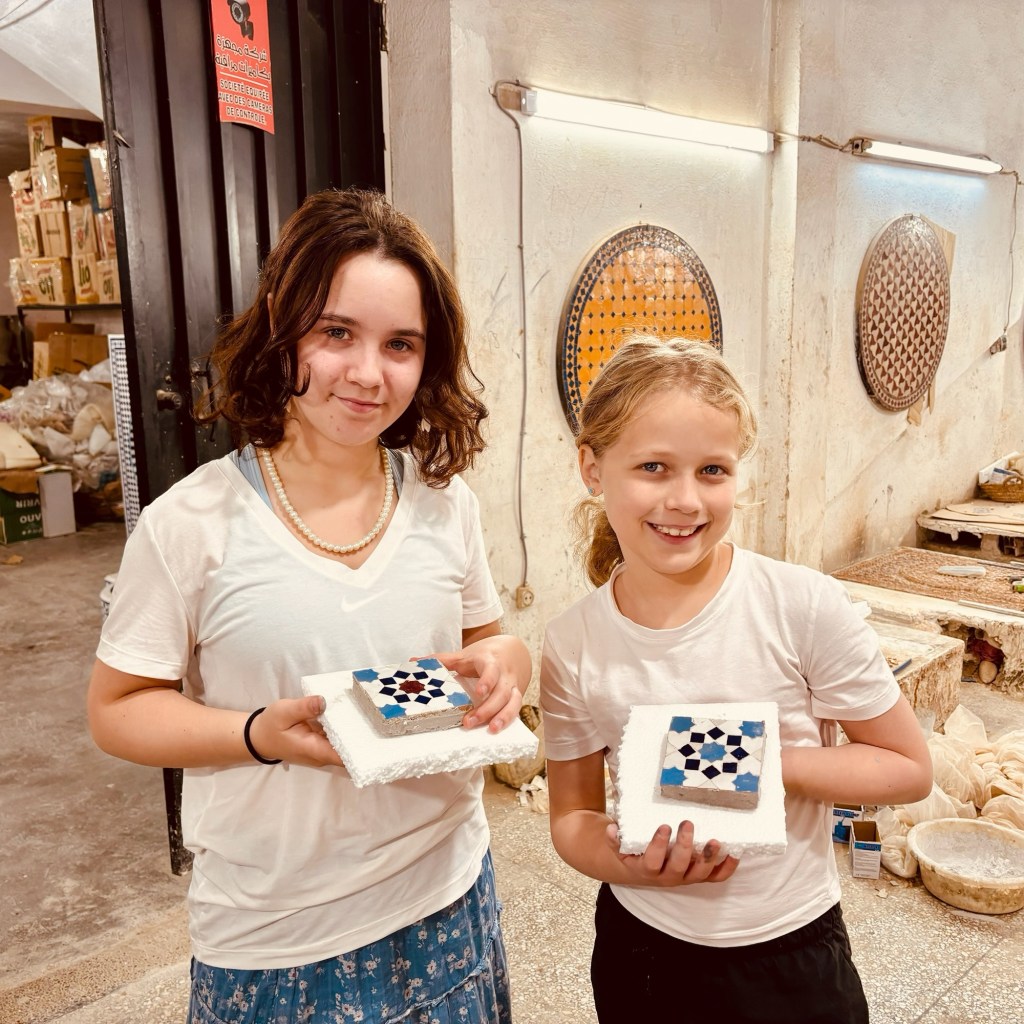
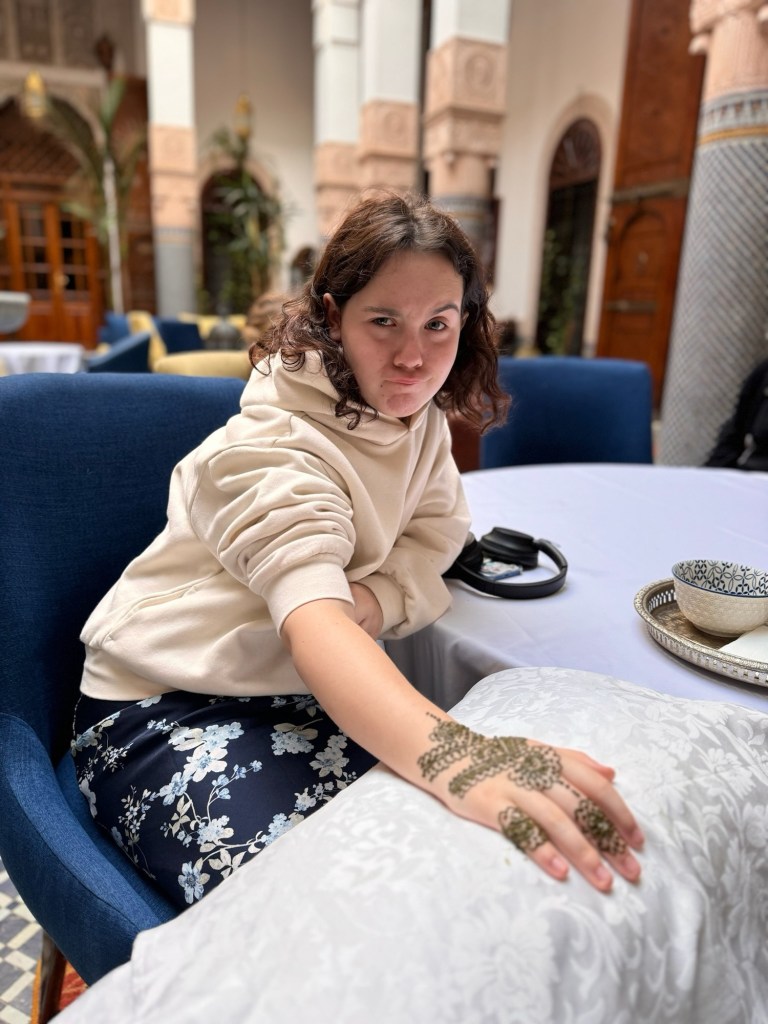
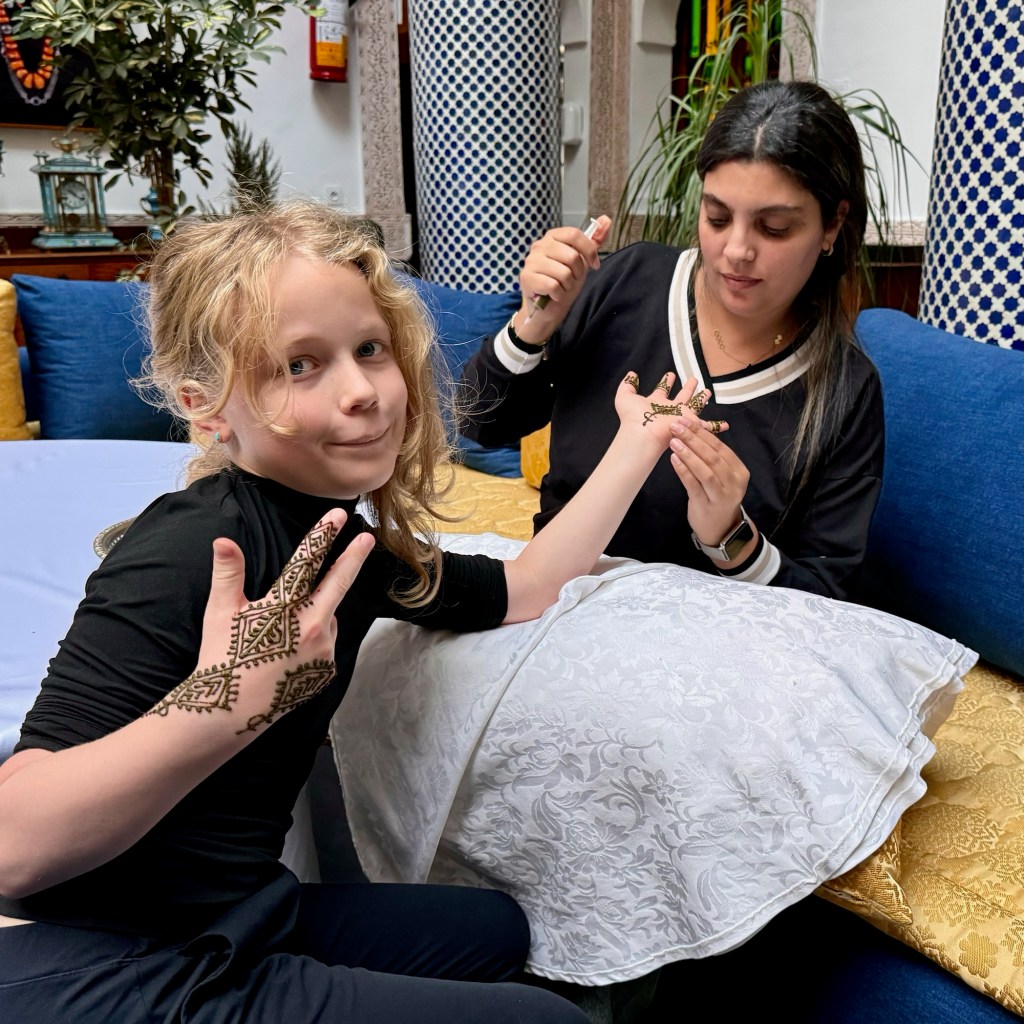
We also spent a lot of time wandering through the medina. Fes is known for its craftwork, particularly mosaic tiles, detailed plasterwork, leather, weaving, and carpentry.  We learned about many of the crafts, visited a famous tannery, and also went to other souks to see where things are made.  After lunch in the medina, we went outside the city to visit the mosaic cooperative where the adults had a tour and the kids took a class: they were able to make some pottery using a manual wheel, create a mosaic with hand-cut pieces, and paint pottery.  They had a blast!  Later the kids even got henna tattoos.  

We spent our last day catching up on school and work in the beautiful courtyard of the riad.  Next up is the Sahara Desert!

Categories
Africa

Morocco (Part 1: Casablanca, Rabat, Chefchaouen)

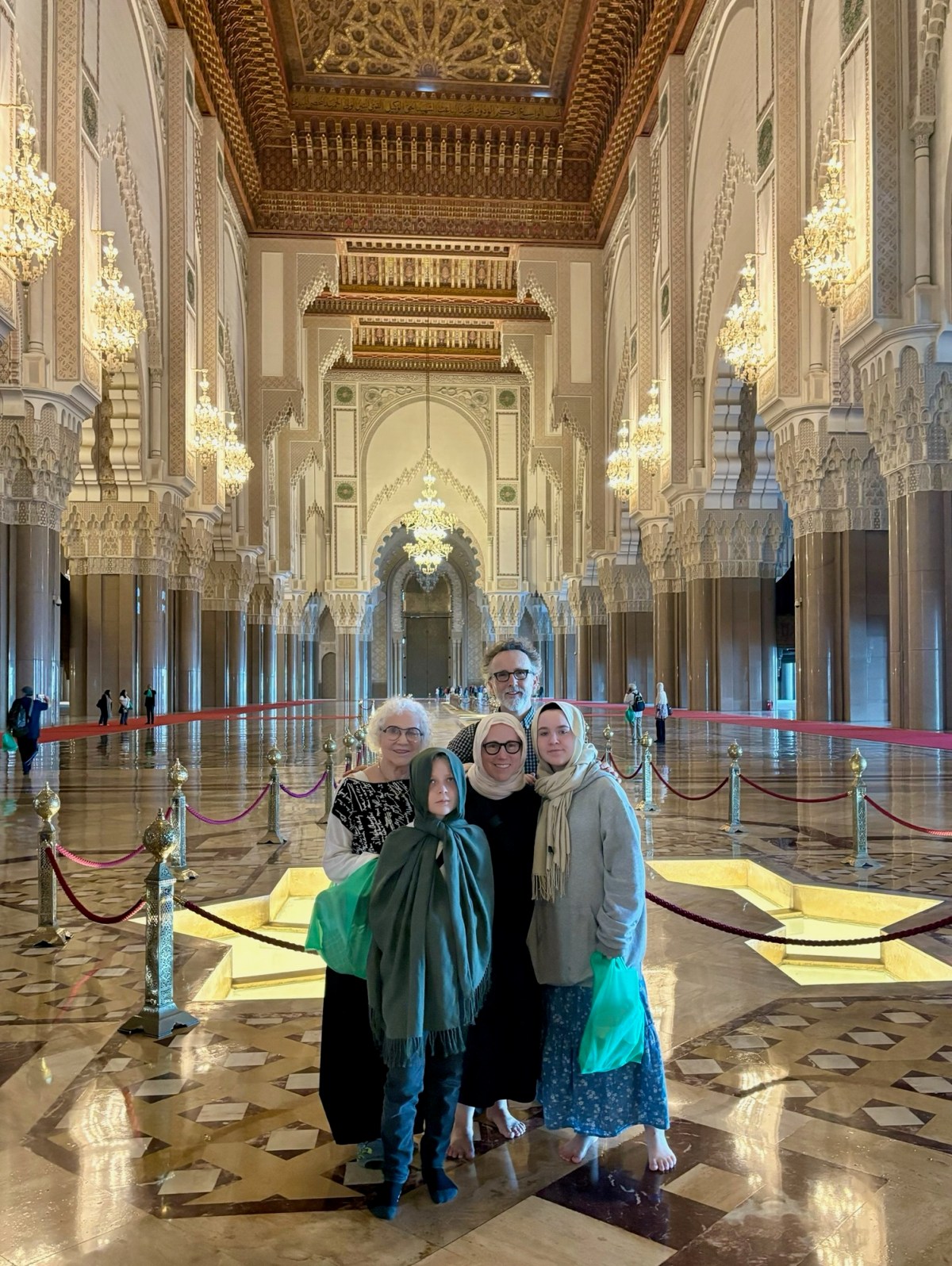
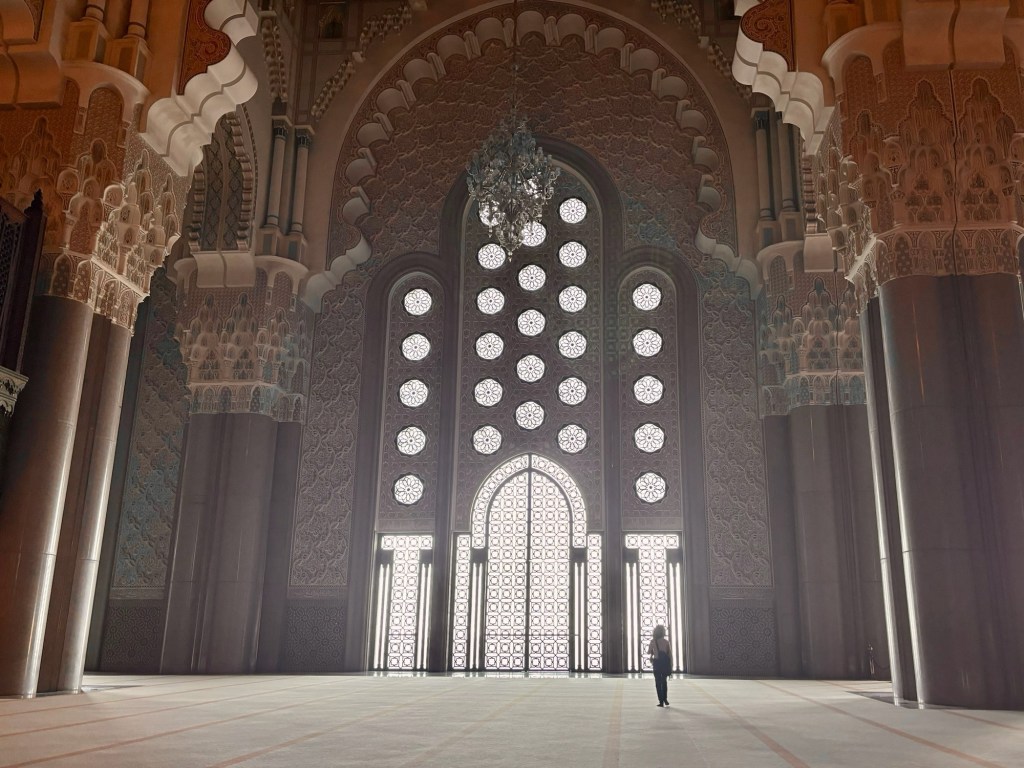
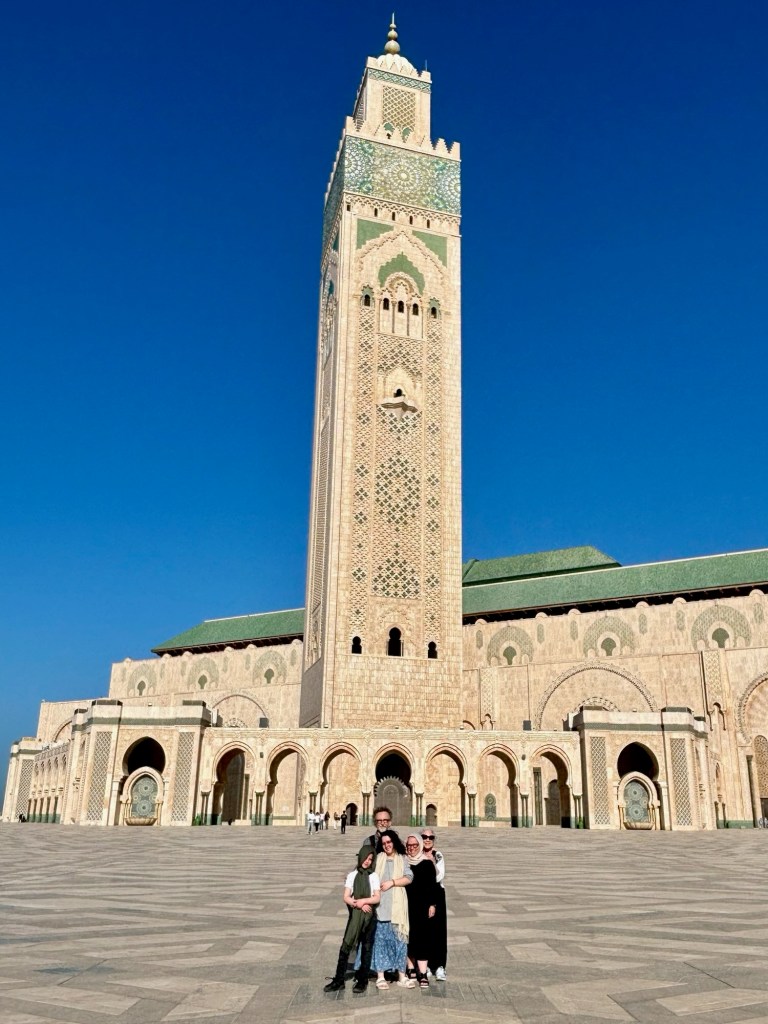
We’ve been in Morocco less than a week and we’ve already done so much.  We met Grandma Martha at the Casablanca airport at 1am so we only got a few hours of sleep.  But it was worth it because the next morning we saw the amazing Hassan II mosque.  We’ve repeatedly heard the history of this mosque and how it seemed ill-advised at the time because of the cost, but how it has been critical in supporting the rise in tourism and protecting crafts in the country.  It was also really interesting to learn more about Islam and to recognize so many similarities with Judaism.

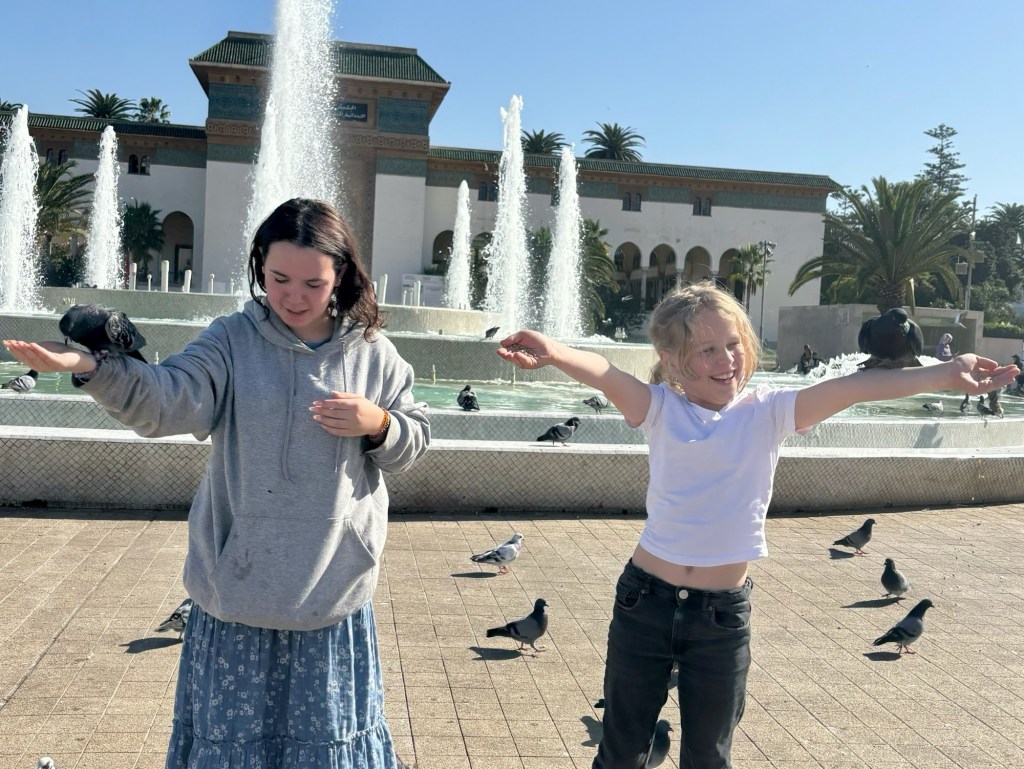
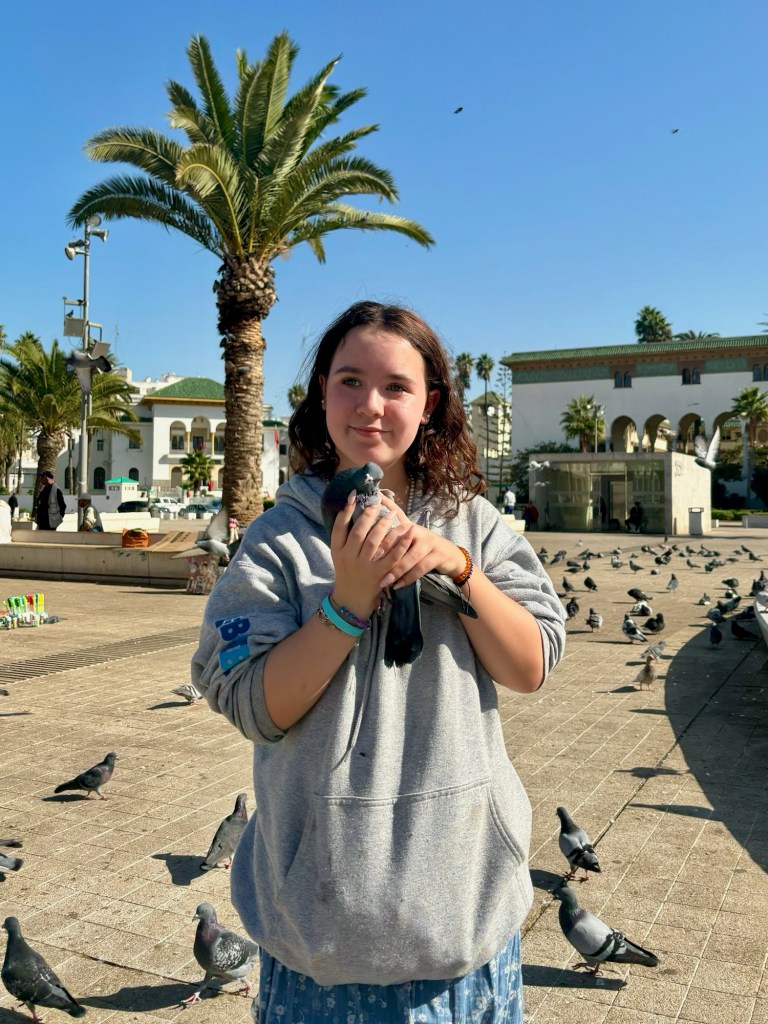
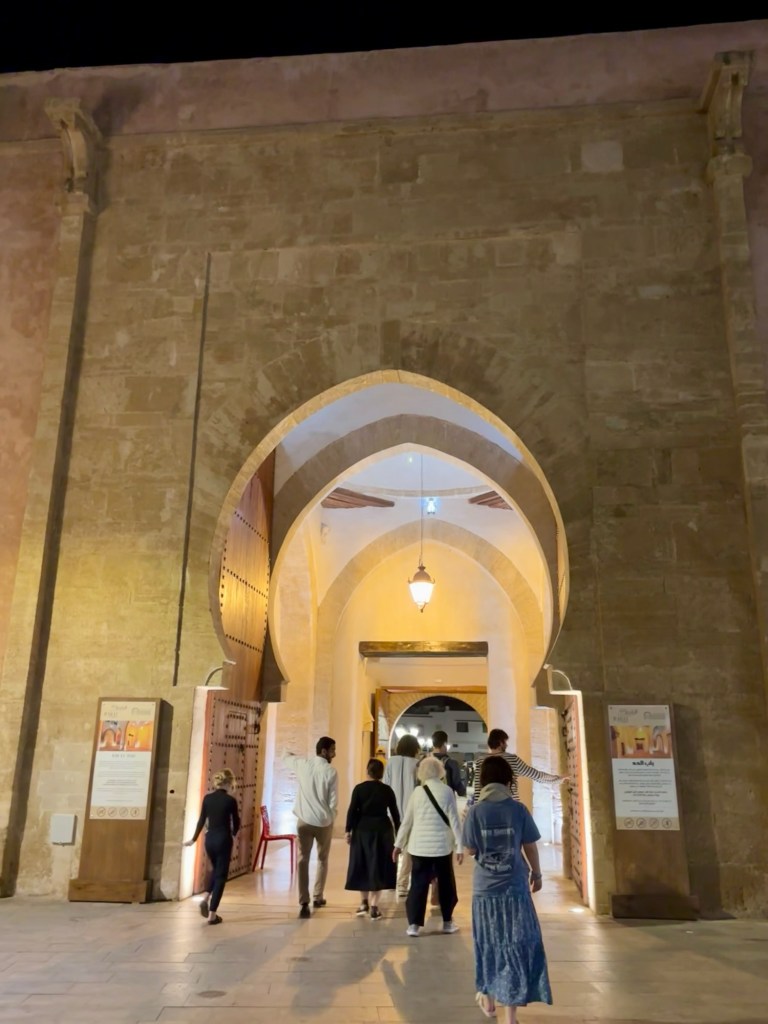
We explored the medina** and bought some incredible Moroccan pastries. We had an incredible guide who was a real match for Dennis and the kids with puns! But there was no doubt that the highlight for the kids was playing with the pigeons.  Mira achieved a lifelong goal of holding a pigeon.  After the adults anxiously watched and tried to stop them, some quick googling revealed that pigeons are not “dirty rats with wings” but actually super clean animals and there’s a pretty interesting history about how they’ve been mischaracterized.  

We spent the next night in Rabat which we hadn’t originally planned but turned out to be wonderful.  We went on a food and medina tour which ensured everyone met their 10,000 steps goal.  We tried so much food (mostly sweets), wandered through the jewish area, skipped eating the cows’ heads, and then had dinner at a beautiful spot outside the walls.  Our guide had both jewish and muslim family so was able to teach us even more about the history of the jewish community in morocco.  

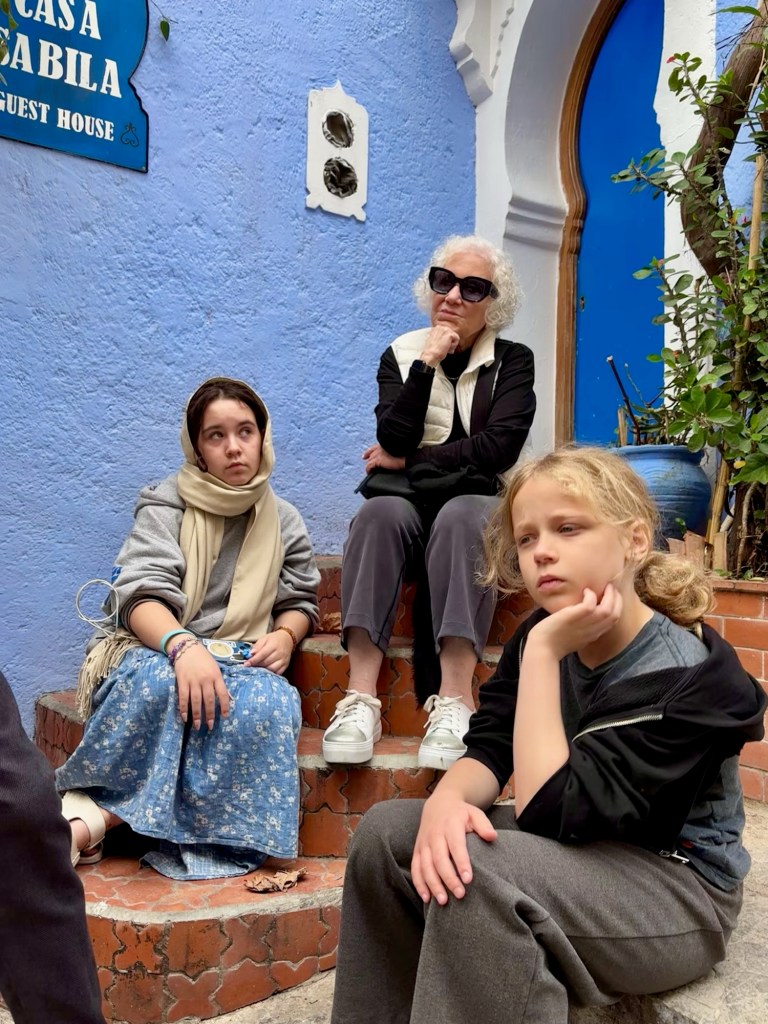
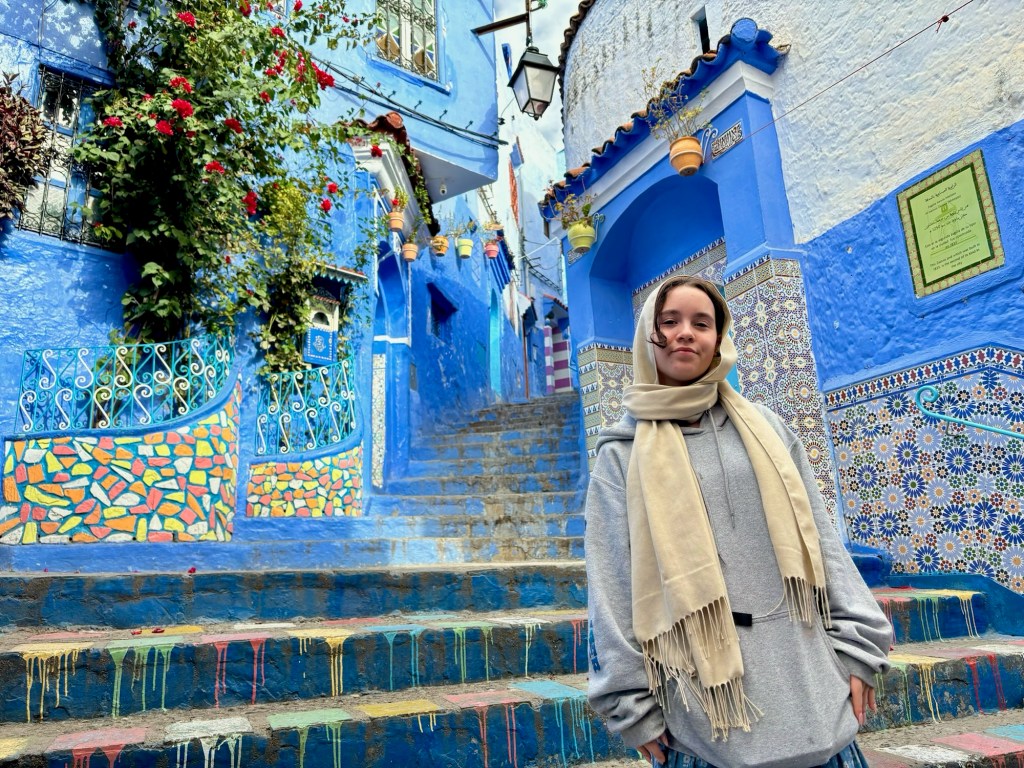
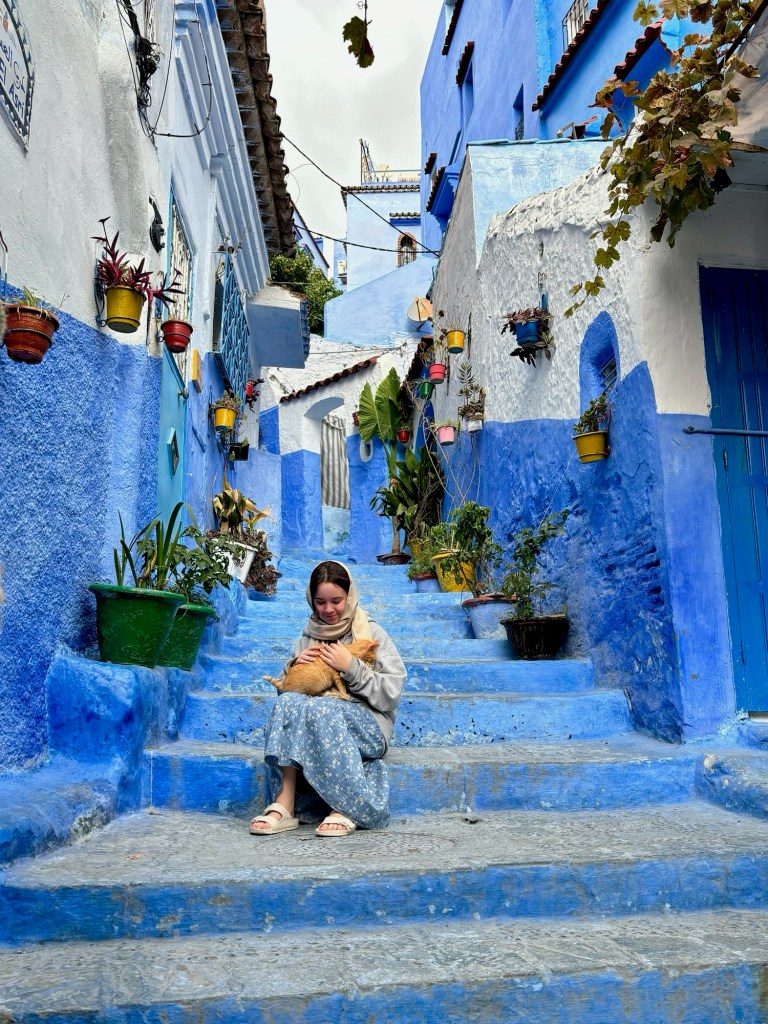
The next day we kept things moving and headed up the Rif mountains to the beautiful city of Chefchaouen. Lately, it has become known as the “blue city” and frequently appears on Instagram.  When we arrived, the street into the medina, however, was closed and we had to walk with our luggage all the way up.  And then our rooms were up many flights of stairs.  Grandma Martha is impressing everyone with how well she’s doing.  The climb was definitely worth it though.  We had an amazing view and the call to prayer floating over the valley from the roof was really beautiful.   In the morning we did a walking tour of the city and meandered through the various small alleys.  We learned about how every community within a medina must have five things: community water access; community ovens; hammam for bathing; mosque; and a school (a madrasa).  The kids especially loved that there are cats and dogs everywhere and they are cared for by the community.  Dogs have tags on their ears showing if they’ve been vaccinated and everybody leaves out food.  We did a lot of stopping to pet cats and take photos. So many photos…. 

After several hours of meandering the streets of Chefchaouen, including stopping at a few “Instagram” streets, we are off to Fes!  

**Medina means “city” in Arabic and it’s also used to mean the “old” city or part of a town that has, so far, been surrounded by a wall.   

(Click on the photos for a full sized sideshow)